
Agritech
Malaysia’s agriculture sector is at a pivotal point of digital transformation, driven both by the need for food security and by national efforts to modernise the economy through the adoption of Fourth Industrial Revolution (4IR) technologies across key sectors. The Ministry of Agriculture and Food Security, the Ministry of Digital, and the Ministry of Science and Technology Innovation are leading this agenda supported by national frameworks such as the National Agrofood Policy 2021-2030 (NAP 2.0), the Malaysia Digital Economy Blueprint (MDEB), and the National 4IR Policy. Collectively, these initiatives provide a coherent roadmap that positions agriculture within Malaysia’s broader digital economy while ensuring innovation strengthens food systems in Malaysia.
Malaysia’s agriculture sector remains a significant contributor to Malaysia’s economy. According to The Department of Statistics Malaysia (DOSM), the sector contributed to 6.3% of Malaysia’s GDP in 2024, and contributed between 10-20% of GDP for multiple states in the same year.
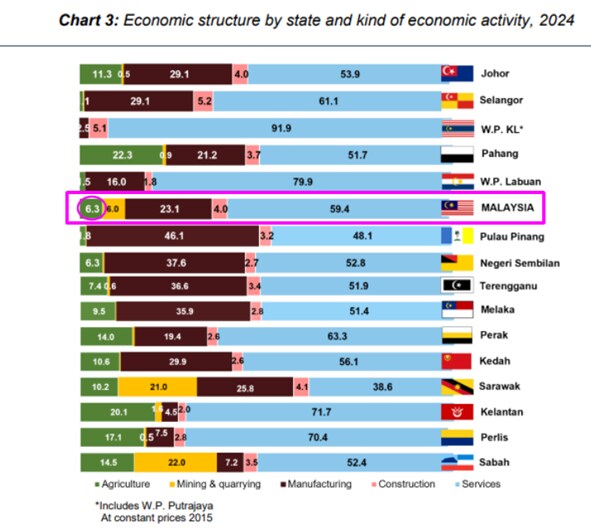
Defining Malaysia’s Landscape with 4IR Technology Integration in Agriculture
Flagship programmes such as the Malaysia Digital AgTech initiative under the Malaysia Digital Economy Corporation (MDEC) have validated over 700 digital solutions. These include precision farming tools, automation systems and data platforms that have collectively boosted productivity and income by 20% as well as reduced operational costs by up to 30%.
The National AI Office (NAIO) has introduced Rakan Tani, an AI-powered platform that connects farmers with market matching, subsidy information, and financing opportunities. It is currently being piloted in Perak with Padiberas Nasional Berhad (BERNAS) - a national paddy company. Rakan Tani acts as an agriculture expert advisor by providing farmers with personalised crop advice, real-time pest and fertiliser guidance, access to subsidies and financing etc, via WhatsApp (in Bahasa Malaysia, English and soon local dialects) for farmers to get actionable help without complex systems. The platform demonstrates how digital tools can be embedded into farmers’ daily routines without the need for new systems integration.
REDtone, one of Malaysia’s leading telecommunications and digital solutions providers, partnered with Pacton Technologies as part of the Malaysia Centre for The Fourth Industrial Revolution (MYCentre4IR) ESG Innovation Challenge, tackling systematic inefficiencies in Malaysia’s aquaculture. Using Pacton’s Fishspeak AIoT platform and a WhatsApp chatbot, they provide real-time data and advisories to smallholder farmers. The pilot reduced fish mortality by ~55% and achieved ~20% feed savings by providing farmers with real-time alerts on dissolved oxygen levels, pH, temperature fluctuations and automated feed schedules. These outcomes translate into tangible benefits for farmers; for instance, boosting harvest yields, increasing income, reducing feed waste, and promoting sustainable aquaculture for smarter farms.
Drones, robotics and satellite monitoring are also becoming more common in plantations which enable farmers to monitor their soil health, optimise fertiliser use and reduce waste, offering a potential glimpse of what Malaysian agriculture could look like if advanced technologies were adopted at scale.
Why Adoption Remains a Challenge
Malaysia’s agriculture sector is experiencing an aging demographic making digital adoption difficult, as older farmers are less inclined to embrace IoT devices, AI-driven crop monitoring, or precision farming compared to younger generations. The Agriculture Census 2024 Interim Report published by DOSM shows that 45.4% of farm holders are aged above 60, with the average farmer age at 56.5 years.
Additionally, agriculture in Malaysia is composed primarily by smallholder farmers, with DOSM’s 2024 Interim Report stating nearly 98% of holdings are managed by individuals rather than corporations. While this structure supports rural livelihoods, it also limits farmers’ ability to absorb the high upfront costs associated with drones, automation and data platforms. Many remain dependent on traditional methods, not by choice, but by necessity.
Cost remains a defining constraint. A study in 2023 found that 85% of farmers invest less than RM10,000 in machinery, reflecting semi-modern rather than fully digital operations. While awareness of smart farming technologies is growing, affordability remains a critical hurdle. Even when farmers recognise the benefits, many simply cannot justify the financial risk without sustained support.
Despite existing government initiatives under NAP 2.0 such as the Smart Paddy Field Project (SBB) or the Kebunti Agriculture Project, adoption of smart farming remains uneven. High upfront costs, limited technical knowledge, and underdeveloped infrastructure continue to appear as the sector’s greatest bottlenecks.
Global Insight: What Malaysia can Learn from C4IR India’s AI4AI Experience
These challenges are not unique to Malaysia. Other countries navigating large smallholder farming systems face similar challenges and have begun to overcome them. One of the most relevant examples comes from India through its AI for Agriculture Innovation (AI4AI) initiative, introduced by India’s Centre for the Fourth Industrial Revolution (C4IR India).
By investing in digital public infrastructure (DPI) and launching the Agriculture Data Exchange (ADeX), India created a trusted and interoperable foundation that connects government services, private-sector innovation and farmer data within a single national ecosystem. This enables smallholder farmers who often lack resources to adapt technology, access to data-driven services such as soil health advisories, pests, weather alerts etc., and make better decisions to sell their produce. This approach ensures that new technologies do not only serve large agribusinesses, but also reach smallholder farmers at scale.
For Malaysia, this success offers a pathway to facilitate its own digital agriculture transformation. Discussions between the Malaysia Centre for the Fourth Industrial Revolution (MYCentre4IR) and C4IR India have revealed a critical challenge: Malaysia lacks a unifying system to connect scattered efforts across ministries, agencies, industry, and farmers. This collaboration provides Malaysia with a unique opportunity to localise global practices by embedding responsible, scalable, and inclusive AI governance into its agricultural digitalisation journey.
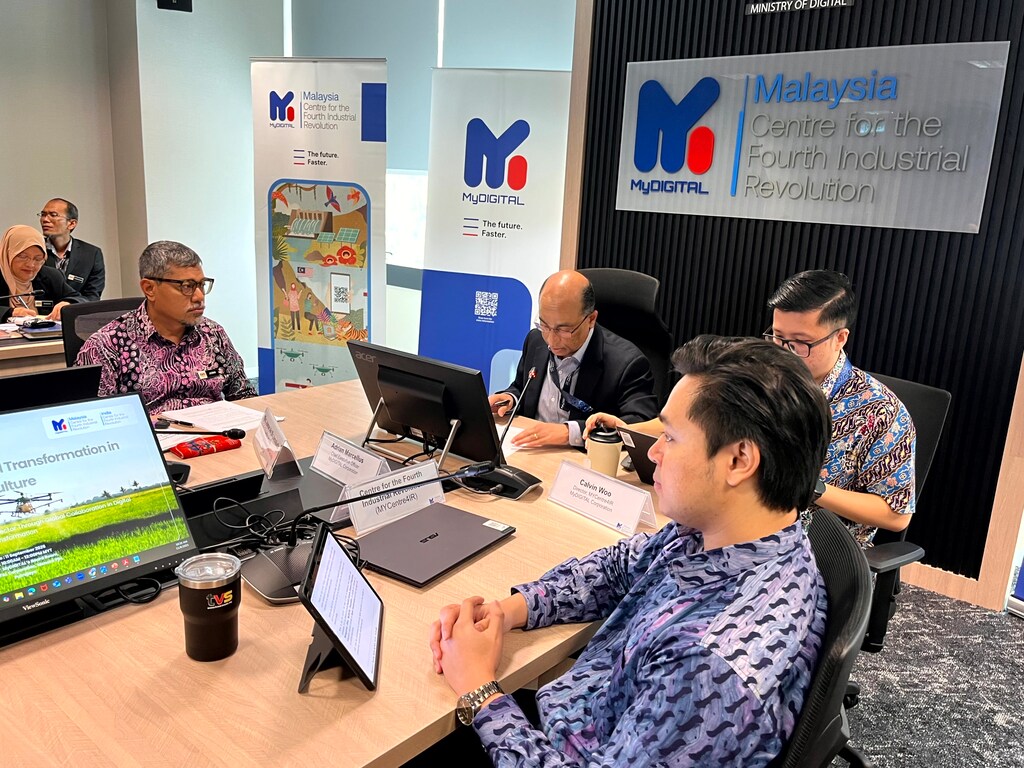
In September 2025, both Centres jointly organised the ‘AI4AI Roundtable on Digital Transformation in Agriculture’, convening 50 participants from the ministry, agencies, academia, and the private sector. The roundtable highlighted Malaysia’s urgent need to balance technological advancement with inclusivity and trust. Participants agreed that innovation must reach smallholder farmers through localised solutions, interoperable infrastructure, and transparent governance.
India’s AI4AI initiative served as a powerful example during the roundtable, showcasing how data-driven advisory systems and DPI can transform smallholder farming at scale. For Malaysia contextualisation matters more than replication. As one participant noted, “technology only works when farmers see it as relevant to their everyday realities.”
Throughout the discussion, participants largely agreed on localising Malaysia’s Agriculture DPI, therefore prioritising accessibility. Such platforms should use Malay/Bahasa Malaysia and local dialects, with simple, visual interfaces to ensure smallholder farmers and rural users can easily adopt digital services. The system must also reflect Malaysia’s regional differences from terrain and weather patterns to connectivity challenges for solutions like crop advice or irrigation alerts that are practical for farmers in both Peninsular Malaysia and East Malaysia.
Malaysia’s DPI platform should focus on its key crops such as palm oil, livestock, fishing, and rubber, as reported by DOSM in 2019. By providing targeted data, predictive analytics, and best-practice guidance tailored to local cultivation cycles and market conditions, digital transformation can directly strengthen the country’s agricultural foundation.
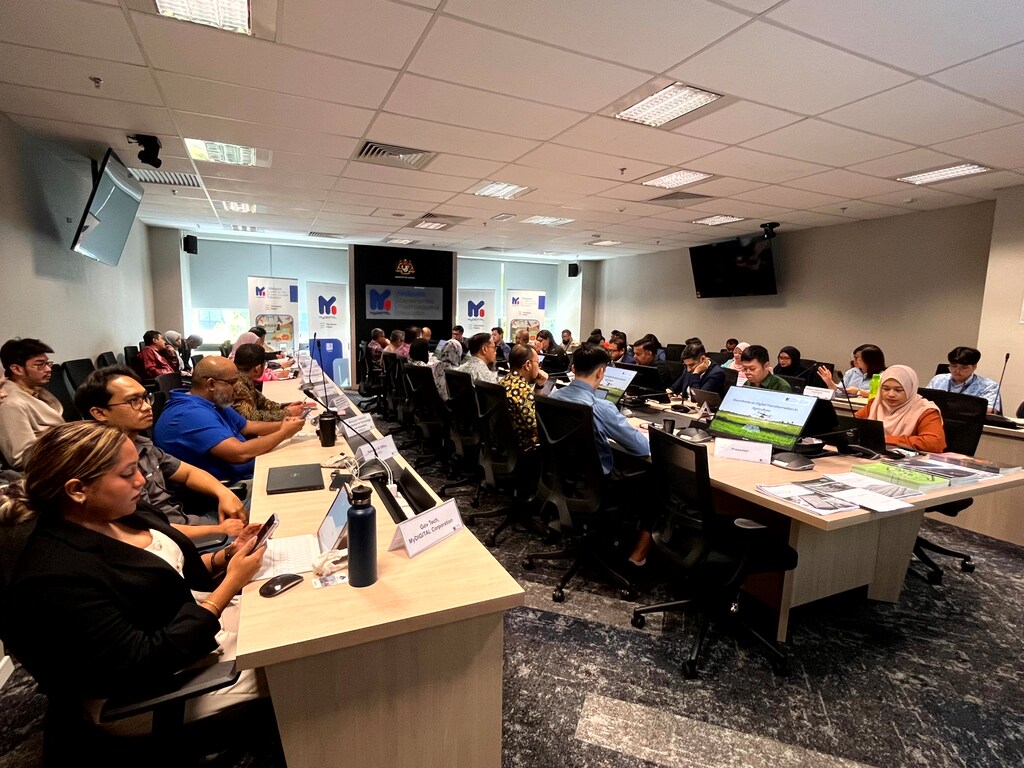
How Do We Leverage Key Insights From The Roundtable with C4IR India?
DPI appears to be a critical enabler of future-ready agriculture that is currently undeveloped in Malaysia. Without interoperable systems, and shared data standards, innovations risk remaining isolated success stories. The establishment of the ADeX platform in Malaysia will facilitate AI adoption and harmonise systems. ADeX could serve as the digital backbone for services like pest advisory and subsidy distribution - all delivered through a single farmer-centric interface.
However, in order to develop a national DPI like ADeX, various factors need to be accounted for:
- Identifying the ministry/agency/statutory body responsible for managing and maintaining the national DPI
- Identifying the entity responsible for managing the farmer data
- Ensuring that privacy and transparency will be safeguarded
- Identifying the body responsible for overseeing risk management and implementing mitigation measures
Capacity-building in digital literacy, local advisory services, and community-based training are essential to equip farmers with the relevant skills to use new technologies effectively. This also creates opportunities for farmers to actively co-create solutions tailored to their needs. By combining trust with capacity building, farmers become empowered to adapt to climate risks, market changes, and evolving technologies, ensuring that digital transformation delivers sustained and long-term impacts.
Charting the Path Ahead
As Malaysia’s agriculture sector embraces digital transformation, collaborative efforts from organisations like MYCentre4IR and C4IR India point to practical ways to make it happen. The shared ambition is clear: to create a central, data-driven and sustainable agri-food system where technology works for people. The success of this ambition can be measured not only by productivity gains or cost reductions, but also in whether farmers feel empowered, livelihoods improve and food security is strengthened.
Collaboration between public institutions, the private sector, and international partners is revealing that the opportunity lies beyond deploying more technology, but rather in connecting systems, people, and data responsibly. Responsible AI governance, empowerment, interoperability and trust are significant pillars of this transformation. Malaysia has the potential to become a regional pioneer in agritech and cultivate a future where farmers thrive through the power of AI and innovation.