The Digital Transformation of Business
SPOTLIGHT SERIES
MYCentre4IR ESG Innovation Challenge:
RECIRCLE SDN BHD
Recircle Sdn Bhd x Sunway iLabs
1. Sector Overview
Enabling Circular Waste Management Through Digital Innovation
As organisations strengthen their ESG commitments, waste management is evolving beyond waste collection into a data-driven function that supports circular economy goals, sustainability reporting, and operational decision-making. Institutions and businesses are increasingly expected to measure waste diversion, improve resource recovery and demonstrate environmental performance through transparent data.
Malaysia has made encouraging progress in advancing its circular economy agenda. The national recycling rate reached 37.9% in 2024, supported by initiatives such as the Solid Waste Circular Economy Blueprint (2025–2035), Separation at Source programmes, and broader circular economy policies introduced by the Government. However, according to Solid Waste and Public Cleansing Management Corporation (SWCorp), almost 40% of municipal waste disposed of in landfills remains recyclable, highlighting significant opportunities to improve material recovery through more effective collection systems, behavioural interventions and digital monitoring.
Among recyclable materials, glass continues to face relatively low recovery rates, particularly in post-consumer waste streams. In Malaysia, challenges such as low economic value, limited source segregation, contamination, and high collection and transportation costs can make glass less economically attractive to recover. As a result, organisations may struggle to establish consistent glass recovery systems and measure recovery performance, environmental impact and ESG outcomes.
Digital technologies present an opportunity to address these challenges by transforming recycling into a measurable and transparent process. Through digital data capture, collection tracking, environmental impact calculations and centralised reporting, organisations can move beyond one-off recycling campaigns towards structured circular economy ecosystems that support continuous improvement and evidence-based sustainability decisions.
Against this backdrop, the Let's Glass Forward pilot explored how digital innovation could strengthen glass recycling within a real operational environment. Conducted over 12 months (April 2025 - March 2026), the pilot established dedicated recycling infrastructure, implemented stakeholder engagement initiatives and deployed Recircle's digital recycling platform. Collection activities commenced with the first on-ground glass collection event in July 2025, and the project ultimately collected 229.5 kg of glass waste while achieving an estimated 68.85 kgCO₂e emissions avoidance, demonstrating how digital solutions can support more transparent and measurable circular waste management.
2. Project Overview
Building a Data-Driven Glass Recycling Ecosystem
The Let’s Glass Forward Glass Recycling Pilot was developed through a collaboration between Recircle and Sunway iLabs under the MYCentre4IR ESG Innovation Challenge, co-organised by MYCentre4IR and Bursa Malaysia.
The initiative was inspired by observations from Sunway Group's sustainability reporting, where glass was identified as one of the lower-recovery waste streams within the broader waste management system (Sunway Sustainability Report 2023, page 72). While recycling programmes already existed, there was an opportunity to strengthen glass recovery through dedicated infrastructure, behavioural engagement, and better data visibility.
Rather than introducing another standalone recycling campaign, the project aimed to demonstrate how digital technology could support a structured recycling ecosystem by integrating collection infrastructure, community engagement, education, and transparent performance tracking.
At the centre of the pilot was Recircle's digital recycling platform, which coordinated collection activities and recorded recycling data throughout the project. Collection volumes were digitally tracked through a centralised dashboard, providing measurable insights into material recovery, estimated carbon emissions avoided, and programme performance over time.
Supporting the digital platform were several complementary initiatives, including:
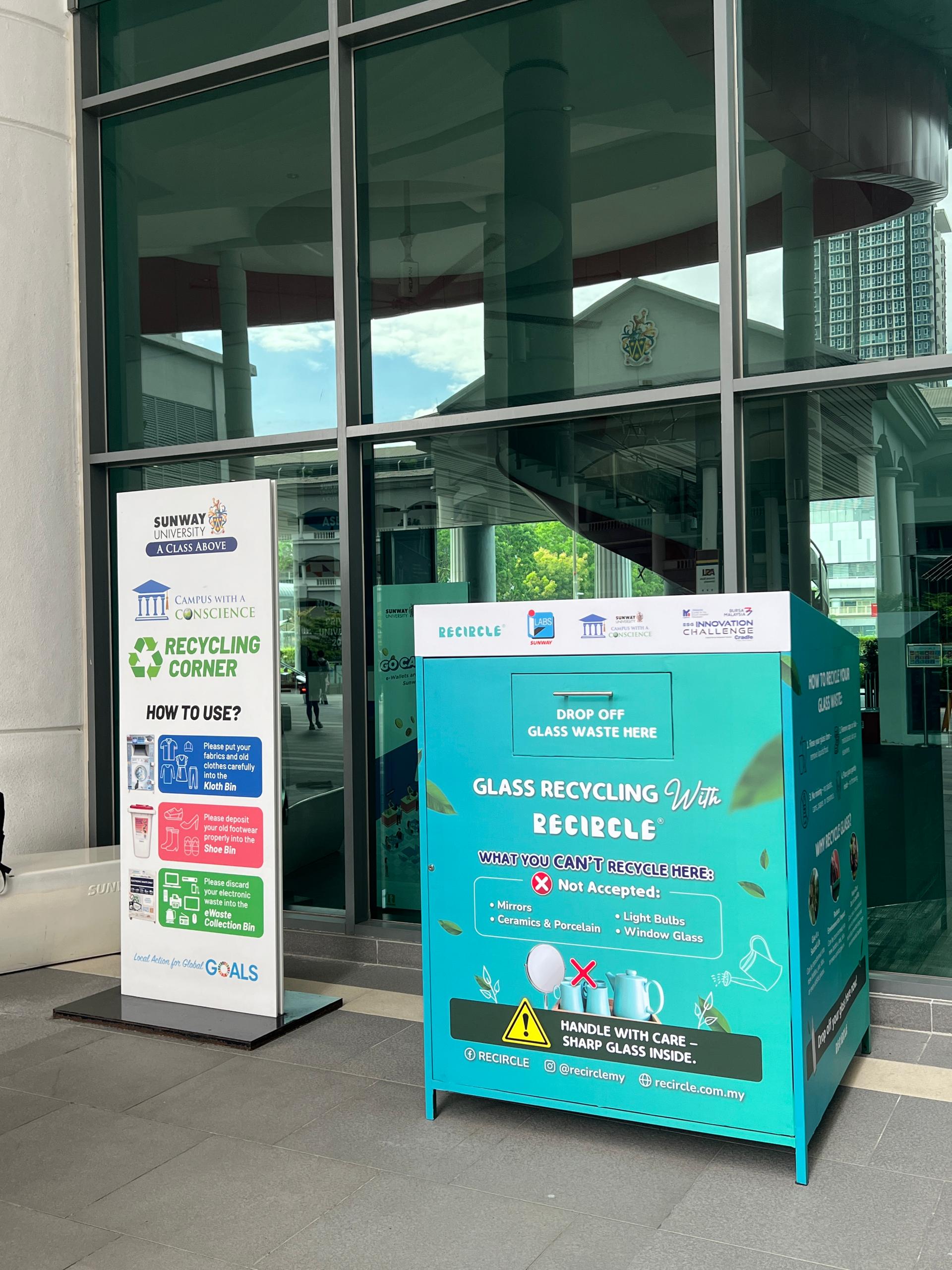
- A dedicated glass recycling bin at Sunway University
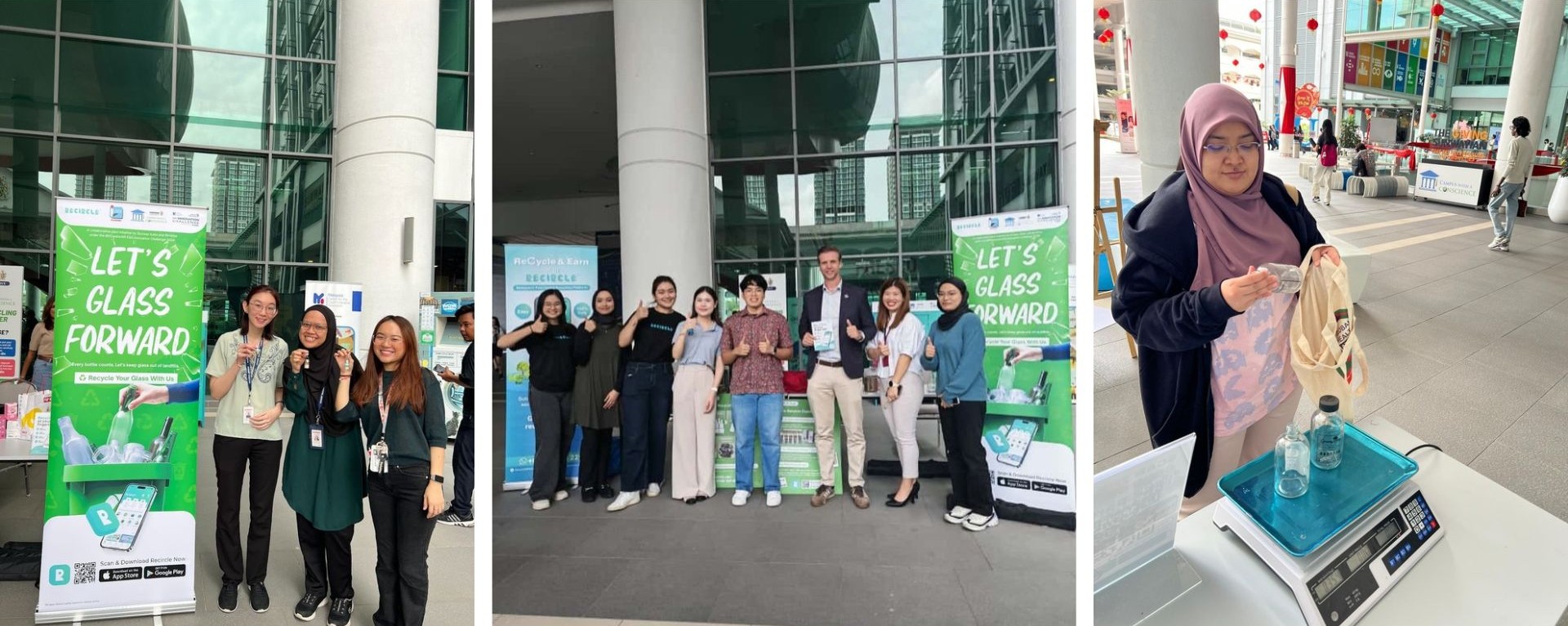
- On-ground collection and engagement activities
- Educational awareness talks and workshops
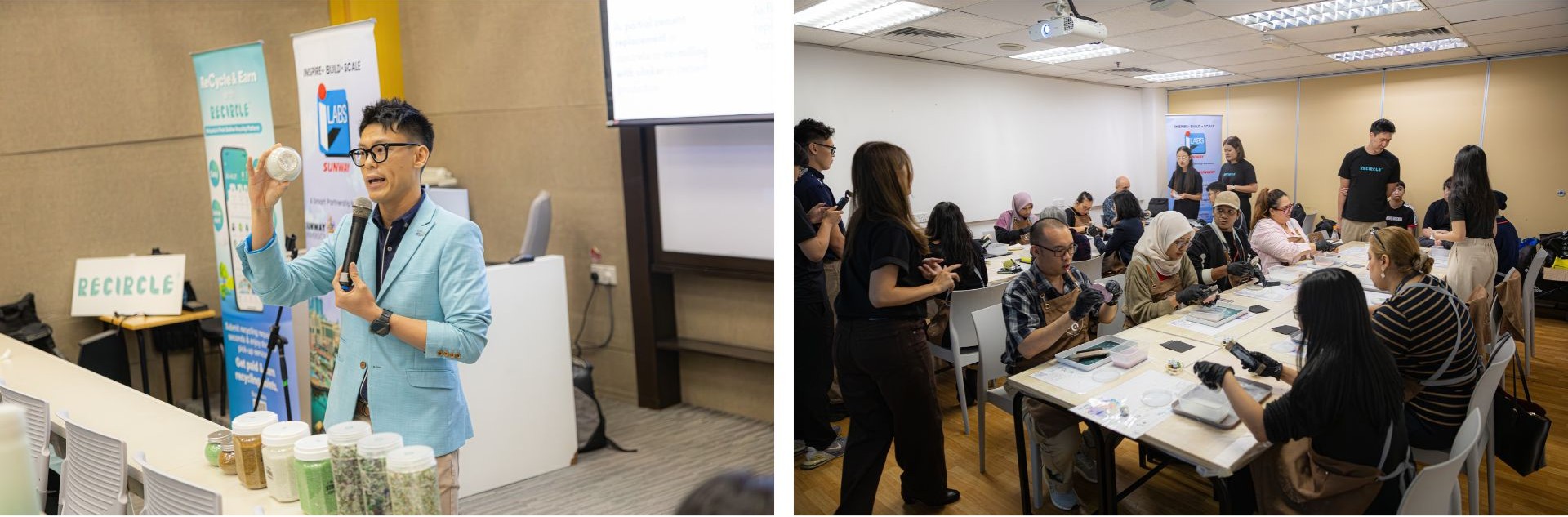
- Glass upcycling experiences and product prototyping
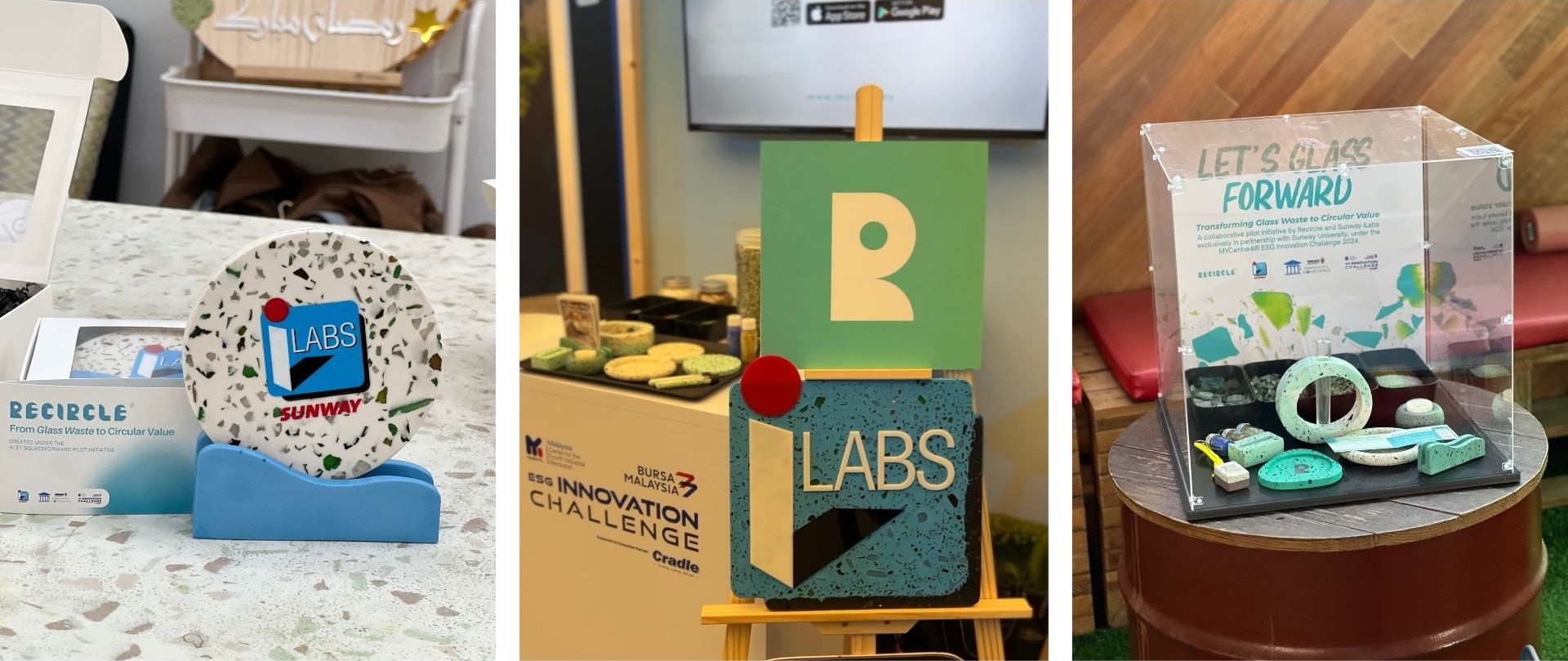
- Digital tracking through Recircle’s recycling portal
Together, these components created a digitally enabled closed-loop recycling ecosystem, where physical recycling activities were continuously supported by data visibility, community engagement and environmental performance measurement.
Over the 12-month implementation period, the pilot progressed from an experimental initiative into a structured recycling model that demonstrates how digital technology can strengthen long-term sustainability programmes.
3. Challenges
Why Glass Recycling Requires a Different Approach
Although recycling initiatives previously existed within the campus ecosystem, glass recycling remained an under-addressed waste category due to several operational and behavioural barriers.
One key challenge was the lack of dedicated infrastructure for glass waste segregation. Without a proper disposal channel, glass materials were often mixed with general waste or recyclable streams, reducing recovery potential and increasing contamination risks.
Another challenge involved low public awareness of proper glass recycling practices. Many users were unfamiliar with requirements such as rinsing containers, separating materials and avoiding contamination from residual liquids or mixed waste.
A more fundamental challenge was the lack of digital tracking throughout the recycling process. Without a structured mechanism to capture and monitor collection data, stakeholders had limited ability to measure recovery rates, estimate carbon emissions avoided, evaluate programme effectiveness or generate reliable ESG reporting. Recycling outcomes therefore remained difficult to quantify despite ongoing sustainability efforts.
Traditional awareness campaigns also tended to generate short-term participation but lacked mechanisms to sustain long-term behavioural change. Without continuous engagement or visible evidence of environmental impact, recycling often remained an abstract concept rather than an everyday habit.
The challenge, therefore, was not simply about placing a recycling bin, but designing a system that could encourage behavioural change, improve recovery quality and generate measurable ESG outcomes in a practical, engaging and scalable manner.
4. Solutions
Building a Structured Glass Recycling Ecosystem
To address these challenges, Recircle designed and implemented an integrated recycling ecosystem that combined digital technology, physical infrastructure, education and stakeholder engagement.
At the core of the initiative was Recircle's digital recycling platform, which digitised the recycling workflow by recording collection activities, consolidating collection data and generating transparent performance dashboards. The platform enabled stakeholders to monitor recycling volumes, estimate carbon emissions avoided, review historical collection trends and generate measurable ESG data throughout the pilot. Rather than relying solely on manual records, recycling activities became quantifiable environmental outcomes that could support sustainability reporting and future decision-making.
Complementing the digital platform was the deployment of a dedicated glass recycling bin at Sunway University's Recycling Corner, providing a permanent collection point that encouraged consistent recycling behaviour beyond individual campaigns.
To support system adoption, the pilot incorporated three structured glass collection events featuring gamification, incentives and interactive engagement activities that encouraged participation while improving understanding of proper recycling practices.
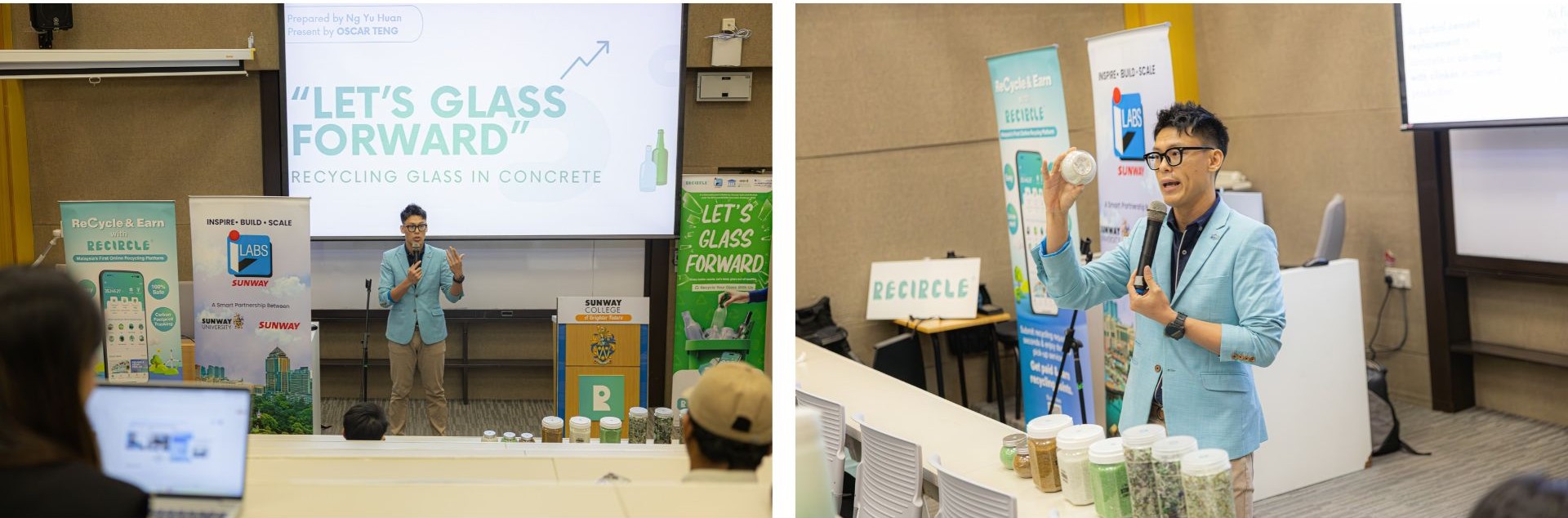
A key component of the pilot was education through expert-led knowledge sharing sessions and hands-on experiences. A session on “Recycling Glass in Concrete” was conducted by Oscar Teng from Luxbee, providing participants with industry insights into how recycled glass can be repurposed within sustainable construction materials and circular applications.
To further bridge recycling awareness with tangible action, Xin Lin from Shí Terrazzo Atelier led hands-on glass upcycling workshops where participants transformed glass waste into customised terrazzo coasters. Beyond workshops, the collaboration also supported the prototyping and development of upcycled products such as coasters, corporate plaques and keychains — demonstrating practical and value-added applications for glass waste.
Over the pilot period, the initiative led to the successful collection of 229.5kg of glass waste and resulted in an estimated reduction of 68.85 kgCO₂e in emissions. The collection data generated through the pilot also provides visibility into waste-related Scope 3 emissions, supporting sustainability monitoring and reporting efforts. As part of this pilot, Recircle also conducted six structured engagement initiatives, and gathered 41 survey responses to better understand behavioural shifts and awareness levels.
The success of the pilot was made possible through collaboration across multiple stakeholders:
- Sunway iLabs provided ecosystem support, facilitation and a real-world pilot environment.
- Recircle designed and implemented the recycling solution: integrating infrastructure, engagement and digital tracking.
- Luxbee contributed technical knowledge on glass recycling applications in the construction sector.
- Shí Terrazzo Atelier supported upcycling workshops and product prototyping to demonstrate circular value creation.
- MYCentre4IR and Bursa Malaysia, through the ESG Innovation Challenge, enabled the pilot through funding and ecosystem facilitation.
5. Why This Matters
Scaling Digital Circular Economy Solutions
The Let's Glass Forward pilot demonstrates that achieving meaningful recycling outcomes requires more than physical collection infrastructure. Long-term success depends on combining accessibility, behavioural engagement and digital technologies that enable recycling performance to be measured, monitored and continuously improved.
More importantly, the project illustrates how digital platforms can transform recycling into actionable ESG intelligence. By converting collection activities into measurable environmental data, organisations gain greater visibility over waste recovery, carbon impact and programme effectiveness, enabling more transparent sustainability reporting and evidence-based operational decisions.
The collaboration also highlights the value of corporate–start-up partnerships in accelerating innovation. Through Sunway iLabs, Recircle was able to validate its digital recycling ecosystem within a real operational environment, refine the solution through continuous learning and demonstrate its potential for wider implementation.
The pilot also highlights the potential for scaling structured glass recycling systems beyond university campuses into commercial buildings, retail spaces and institutional environments. By combining collection infrastructure, digital tracking and stakeholder engagement, the model can be adapted across different Sunway business units to support more consistent waste diversion and sustainability reporting.
Following the pilot, elements of the model have already been extended into other initiatives, including awareness programmes and external engagements through Recircle’s sustainability initiatives and workshops.
At the national level, the project supports Malaysia’s circular economy and ESG ambitions by demonstrating how innovation, collaboration and measurable systems can work together to improve waste recovery and sustainability outcomes.
In many ways, the project reflects a simple but important shift — where waste is no longer an endpoint, but a valuable resource with untapped potential.