
Energy Transition Index
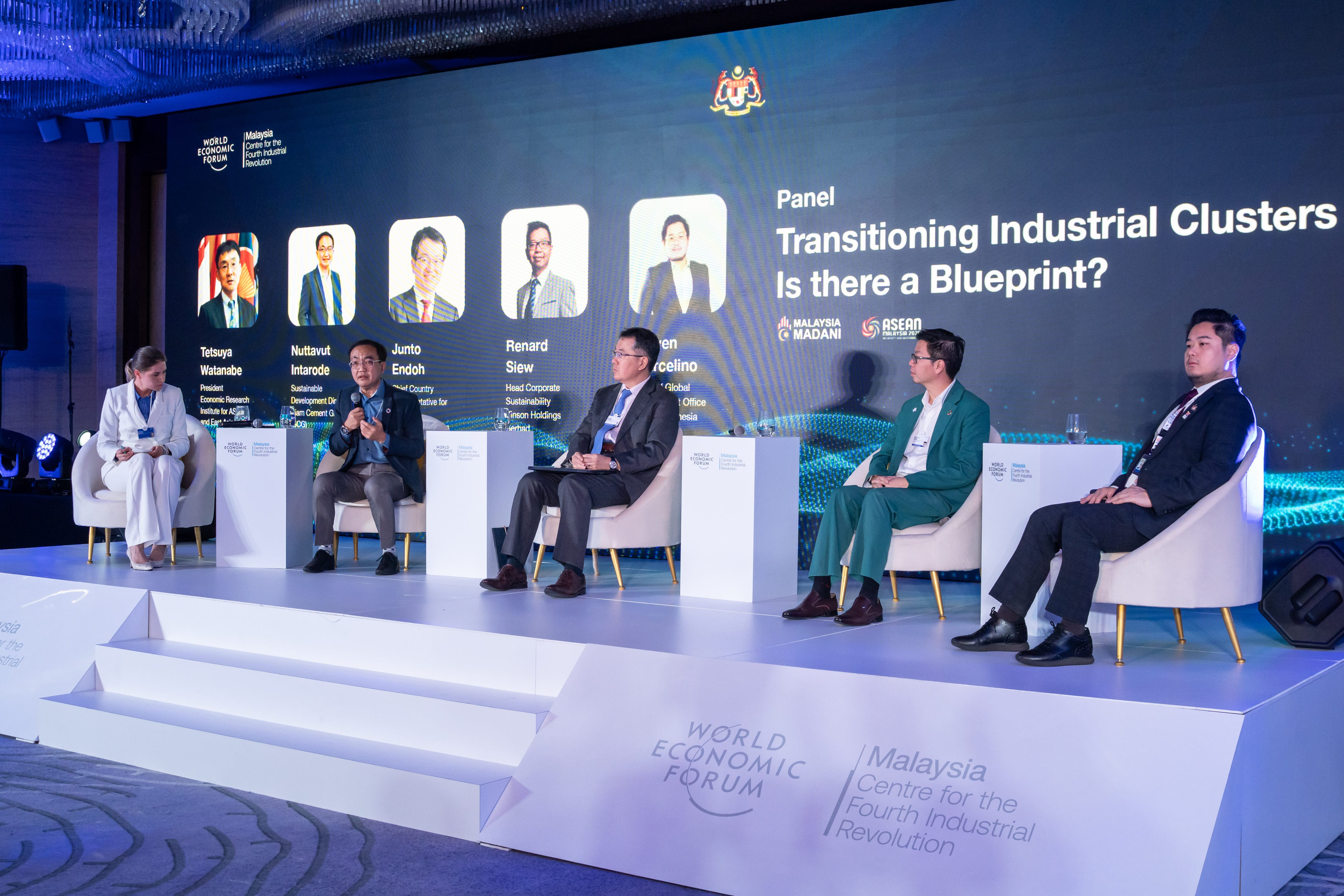
Southeast Asia has taken a decisive step towards a more sustainable and integrated energy future. Convened alongside the 46th ASEAN Leaders’ Summit, the Energy Transition Meeting in ASEAN: Fostering Regional Cooperation event brought together over 200 high-level leaders across government, industry and civil society to shape a unified path forward, one that prioritises regional power grid integration, industrial decarbonisation, just transition finance and cross-border energy policy alignment. The event, co-hosted by Malaysia Centre4IR (MYCentre4IR) and the World Economic Forum, showcased ASEAN’s resolve to lead the Global South’s clean economy transformation.
A Region Rising to the Moment
With energy demand surging and climate vulnerabilities mounting, ASEAN is at a strategic inflection point. The meeting opened with a rallying call for stronger regional collaboration emphasising multilateral coordination on energy security, cross-border infrastructure (e.g. the ASEAN Power Grid), harmonised policies for carbon markets and transition finance. An internationally renowned economist encouraged ASEAN to “proceed at a good pace,” in its energy transition, advancing renewables, integrated infrastructure, and coordinated financing policies. Another regional leader reaffirmed China’s long-term support for green investment, particularly its growing role in financing renewable energy and low-carbon infrastructure across Southeast Asia. This includes bilateral initiatives under the ASEAN-China energy cooperation framework, supporting ASEAN member states in bridging the clean energy investment gap.
From Finance Gaps to Real Deals
ASEAN faces a US$200 billion annual investment gap to meet its clean energy goals. Yet only US$30 billion was mobilised in 2021, according to the IEA and Imperial College London’s report, ASEAN Renewables: Opportunities and Challenges (2023). At the meeting, stakeholders explored solutions to close this gap, including transition credits—financial instruments that monetise verified emissions reductions from coal phase-out while supporting just transition efforts like job retraining. High-integrity credit methodologies developed with input from central banks aim to ensure that emissions reductions are real, additional and measurable. Early examples, such as the Singapore–Indonesia green electricity corridor and coal transition pilots in Indonesia and the Philippines, show what is possible but also reveal the need for clearer regulatory frameworks and long-term price signals to accelerate low-carbon projects and secure funding for emissions reduction initiatives. Stable price signals give investors the confidence to back renewable infrastructure, energy efficiency upgrades and coal phaseout strategies at scale.
ASEAN faces a US$200 billion annual investment gap to meet its clean energy goals. Yet only US$30 billion was mobilised in 2021, according to the IEA and Imperial College London’s report, ASEAN Renewables: Opportunities and Challenges (2023). At the meeting, stakeholders explored solutions to close this gap, including transition credits—financial instruments that monetise verified emissions reductions from coal phase-out while supporting just transition efforts like job retraining. High-integrity credit methodologies developed with input from central banks aim to ensure that emissions reductions are real, additional and measurable. Early examples, such as the Singapore–Indonesia green electricity corridor and coal transition pilots in Indonesia and the Philippines, show what is possible but also reveal the need for clearer regulatory frameworks and long-term price signals to accelerate low-carbon projects and secure funding for emissions reduction initiatives. Stable price signals give investors the confidence to back renewable infrastructure, energy efficiency upgrades and coal phaseout strategies at scale.
Supercharging Regional Integration: The ASEAN Power Grid
A cornerstone of the meeting was the advancement of the ASEAN Power Grid (APG). Leaders endorsed a new enhanced MOU, targeted for signing at the 43rd ASEAN Ministers on Energy Meeting (AMEM) in October 2025. Key developments include the launch of three task forces—policy, technical and legal/regulatory focused on grid-to-grid multilateral trade, replacing fragmented bilateral exchanges. The APG project involves an estimated $250 billion in capital expenditure, with strong emphasis on private sector mobilisation and policy stability. The APG is now central not just to energy, but to digital economy integration, given the region’s data centre boom and fiber-optic infrastructure potential.
A cornerstone of the meeting was the advancement of the ASEAN Power Grid (APG). Leaders endorsed a new enhanced MOU, targeted for signing at the 43rd ASEAN Ministers on Energy Meeting (AMEM) in October 2025. Key developments include the launch of three task forces—policy, technical and legal/regulatory focused on grid-to-grid multilateral trade, replacing fragmented bilateral exchanges. The APG project involves an estimated $250 billion in capital expenditure, with strong emphasis on private sector mobilisation and policy stability. The APG is now central not just to energy, but to digital economy integration, given the region’s data centre boom and fiber-optic infrastructure potential.

Scaling Clean Fuels and Embracing Nuclear
Discussions also centred on new energy sources as part of ASEAN’s drive to diversify its energy mix. One delegate announced plans for a new biofuel refinery capable of processing 650,000 tonnes per year underscoring rising interest in low-carbon fuels across the region. Speakers also emphasised the importance of carbon pricing and gradual subsidy reform to accelerate clean fuel adoption. Nuclear energy, particularly through Small Modular Reactors (SMRs) and floating platforms, was positioned as a viable baseload replacement especially for archipelagic states with limited connectivity to the main grid. A proposal to establish a regional platform for nuclear cooperation and capacity building was widely welcomed, alongside calls to integrate nuclear energy into regional green taxonomies and sustainable finance frameworks. In parallel, the region’s data centre boom is driving an urgent need for clean, reliable energy. Over the next one to two decades, data centre electricity demand in Southeast Asia is expected to rise sharply, nearly doubling by 2030 compared to 2024 levels, according to the IEA’s Southeast Asia Energy Outlook (2024). In countries like Malaysia, which is positioning itself as a regional data infrastructure hub, this growth could drive demand from approximately 9 TWh in 2024 to around 68 TWh by 2030, potentially accounting for up to 30% of national electricity consumption, according to Ember’s From AI to Emissions: Aligning ASEAN’s Digital Growth with Energy Transition Goals (2025). This surge will also significantly increase water consumption for cooling, placing additional pressure on utilities.
Discussions also centred on new energy sources as part of ASEAN’s drive to diversify its energy mix. One delegate announced plans for a new biofuel refinery capable of processing 650,000 tonnes per year underscoring rising interest in low-carbon fuels across the region. Speakers also emphasised the importance of carbon pricing and gradual subsidy reform to accelerate clean fuel adoption. Nuclear energy, particularly through Small Modular Reactors (SMRs) and floating platforms, was positioned as a viable baseload replacement especially for archipelagic states with limited connectivity to the main grid. A proposal to establish a regional platform for nuclear cooperation and capacity building was widely welcomed, alongside calls to integrate nuclear energy into regional green taxonomies and sustainable finance frameworks. In parallel, the region’s data centre boom is driving an urgent need for clean, reliable energy. Over the next one to two decades, data centre electricity demand in Southeast Asia is expected to rise sharply, nearly doubling by 2030 compared to 2024 levels, according to the IEA’s Southeast Asia Energy Outlook (2024). In countries like Malaysia, which is positioning itself as a regional data infrastructure hub, this growth could drive demand from approximately 9 TWh in 2024 to around 68 TWh by 2030, potentially accounting for up to 30% of national electricity consumption, according to Ember’s From AI to Emissions: Aligning ASEAN’s Digital Growth with Energy Transition Goals (2025). This surge will also significantly increase water consumption for cooling, placing additional pressure on utilities.
Participants also stressed the urgent need to adopt energy and water‑efficient technologies, such as liquid cooling, modular data centre designs, and on‑site renewable energy systems. Embracing these solutions is critical to achieving national sustainability targets while accommodating ASEAN’s rapidly expanding digital economy.
Industrial Policy and the Clean Economy Agreement
A dedicated session on the proposed ASEAN Clean Economy Agreement (CEA) revealed broad support for a regionally aligned industrial policy for decarbonisation, along with standardised market rules and certification frameworks for carbon and energy credits. Delegates also explored the idea of a multilateral clean energy fund designed to pool regional and international capital to de-risk investment in cross-border grid infrastructure, clean fuels, and energy storage. The CEA was framed not only around mitigation, but also adaptation, biodiversity and a just transition, with strong calls to ensure the region’s green transformation is inclusive and equitable, leaving no country or community behind.
A dedicated session on the proposed ASEAN Clean Economy Agreement (CEA) revealed broad support for a regionally aligned industrial policy for decarbonisation, along with standardised market rules and certification frameworks for carbon and energy credits. Delegates also explored the idea of a multilateral clean energy fund designed to pool regional and international capital to de-risk investment in cross-border grid infrastructure, clean fuels, and energy storage. The CEA was framed not only around mitigation, but also adaptation, biodiversity and a just transition, with strong calls to ensure the region’s green transformation is inclusive and equitable, leaving no country or community behind.
Enabling Carbon Markets and Digital Infrastructure
Speakers also outlined the steps needed to make ASEAN a credible player in global carbon markets. They emphasised the need to align ASEAN’s carbon credits with international standards, operationalise the ASEAN Common Carbon Framework (ACCF) within the CEA, and enhance legal protections and demand signals to unlock private capital. Technological innovation also featured, with a regional stakeholder and others advocating for integrated digital-energy planning, such as synchronised forecasting, smart grid optimisation and regional data governance to improve efficiency and resilience. This includes the development of shared data platforms regionally, enabling seamless exchange of information on energy demand, emissions tracking and grid capacity.
Speakers also outlined the steps needed to make ASEAN a credible player in global carbon markets. They emphasised the need to align ASEAN’s carbon credits with international standards, operationalise the ASEAN Common Carbon Framework (ACCF) within the CEA, and enhance legal protections and demand signals to unlock private capital. Technological innovation also featured, with a regional stakeholder and others advocating for integrated digital-energy planning, such as synchronised forecasting, smart grid optimisation and regional data governance to improve efficiency and resilience. This includes the development of shared data platforms regionally, enabling seamless exchange of information on energy demand, emissions tracking and grid capacity.
Roadmap Forward
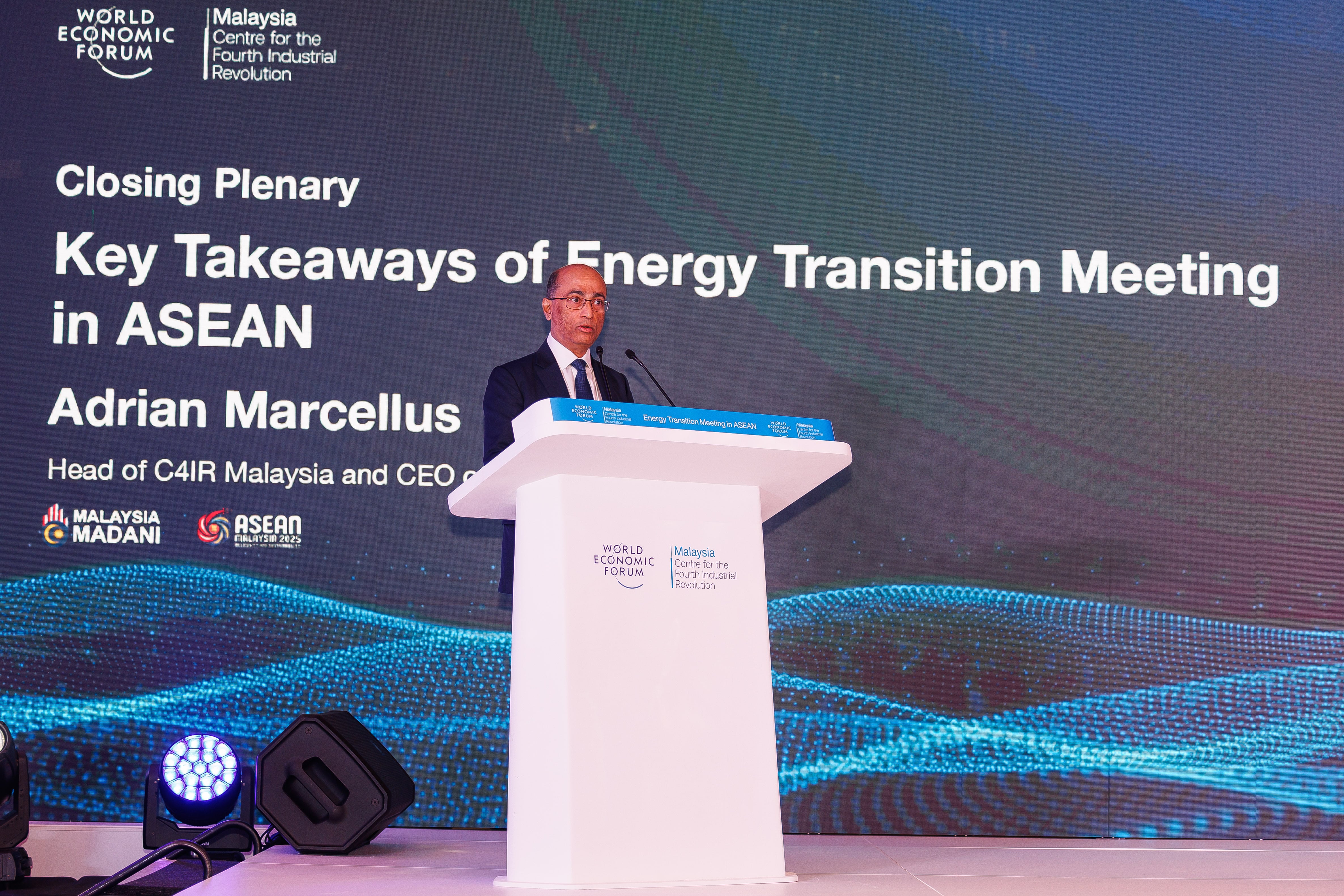
The Energy Transition Meeting in ASEAN: Fostering Regional Cooperation closed with a clear agenda and next steps. This includes signing the enhanced APG MOU by October 2025, finalising transition credit tools and buyer engagement strategies targeting utilities, large corporates, and multinational offtakers with net-zero commitments, operationalising the ACCF within the Clean Economy Agreement, establishing capacity-building programmes for regulators and energy professionals, and launching early pilots for green offtake agreements using blended finance. In parallel, the Transitioning Industrial Clusters (TIC) initiative was highlighted as a platform to accelerate systems-level industrial decarbonisation across key ASEAN manufacturing hubs integrating grid modernisation, digital infrastructure, and clean technology investments into investable project portfolios.
The Energy Transition Meeting in ASEAN: Fostering Regional Cooperation closed with a clear agenda and next steps. This includes signing the enhanced APG MOU by October 2025, finalising transition credit tools and buyer engagement strategies targeting utilities, large corporates, and multinational offtakers with net-zero commitments, operationalising the ACCF within the Clean Economy Agreement, establishing capacity-building programmes for regulators and energy professionals, and launching early pilots for green offtake agreements using blended finance. In parallel, the Transitioning Industrial Clusters (TIC) initiative was highlighted as a platform to accelerate systems-level industrial decarbonisation across key ASEAN manufacturing hubs integrating grid modernisation, digital infrastructure, and clean technology investments into investable project portfolios.
A Defining Decade Begins
As Malaysia steers the ASEAN Chairmanship in 2025, the region is sending a powerful message: decarbonisation, economic growth and economic integration can go hand-in-hand. From coal transition credits to regional power trade, and from clean fuels to green industrial policy, ASEAN has laid the groundwork for a just, investable and interconnected energy future.
As Malaysia steers the ASEAN Chairmanship in 2025, the region is sending a powerful message: decarbonisation, economic growth and economic integration can go hand-in-hand. From coal transition credits to regional power trade, and from clean fuels to green industrial policy, ASEAN has laid the groundwork for a just, investable and interconnected energy future.
The meeting conveyed a clear message: the world is watching, and ASEAN is proving that the Global South can lead, not follow.
The opportunity now is to turn ambition into action—by strengthening cooperation, scaling investments, and ensuring no country is left behind in ASEAN’s energy transition.